So what took place that evening?
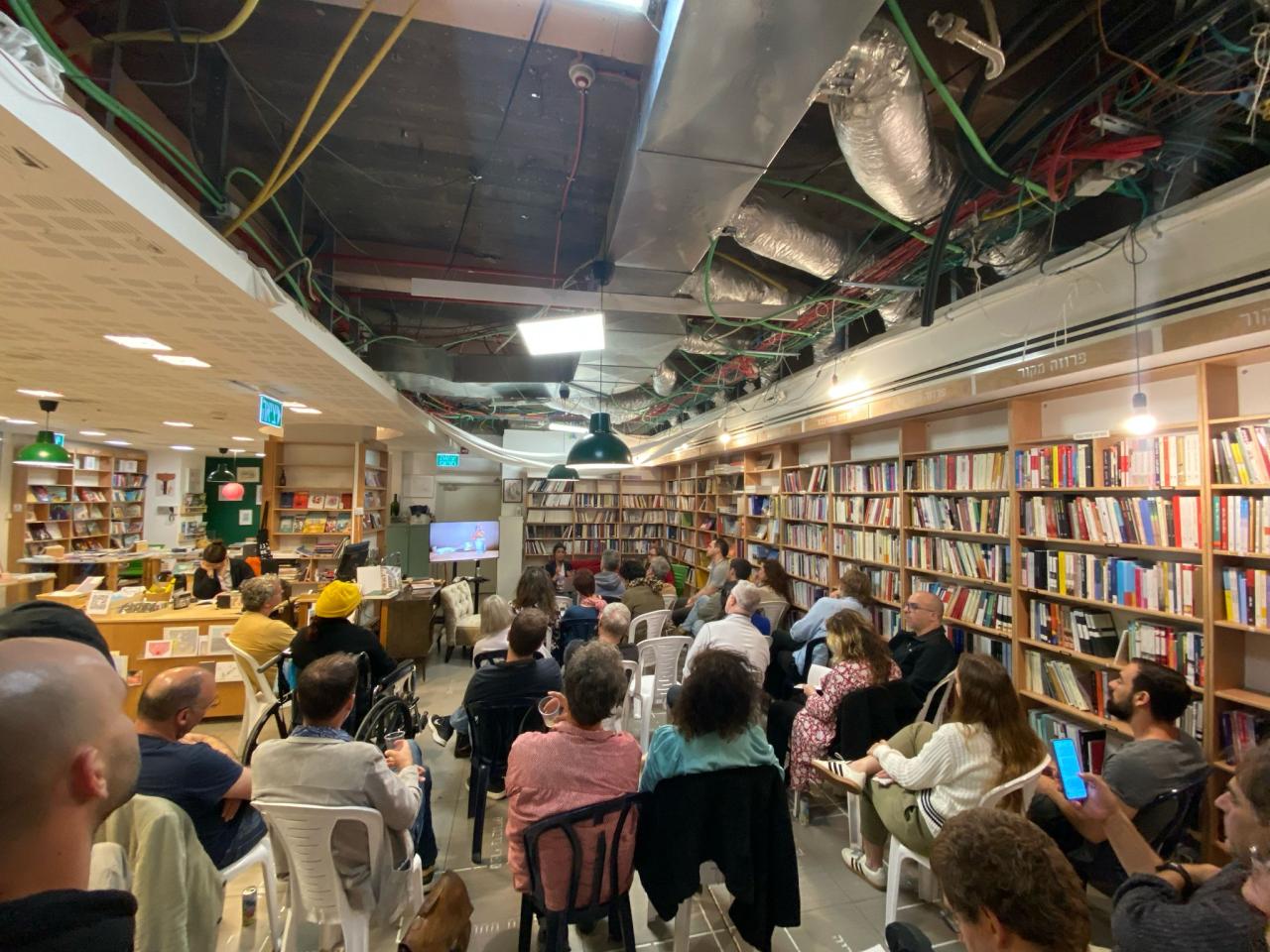
We opened the series with a special event at “Reading”, the beautiful independent bookstore at 43 Allenby Street in Tel Aviv. With its intimate atmosphere, thoughtful design, and shelves of inspiring books, it proved to be the ideal setting for a live conversation about big ideas.
The evening began with a provocative question:
What does a dialogue between a researcher and her algorithmic double look like?
What happens when a scholar shares the stage with her digital counterpart, created through artificial intelligence?
Can an algorithm meaningfully participate in a philosophical conversation?
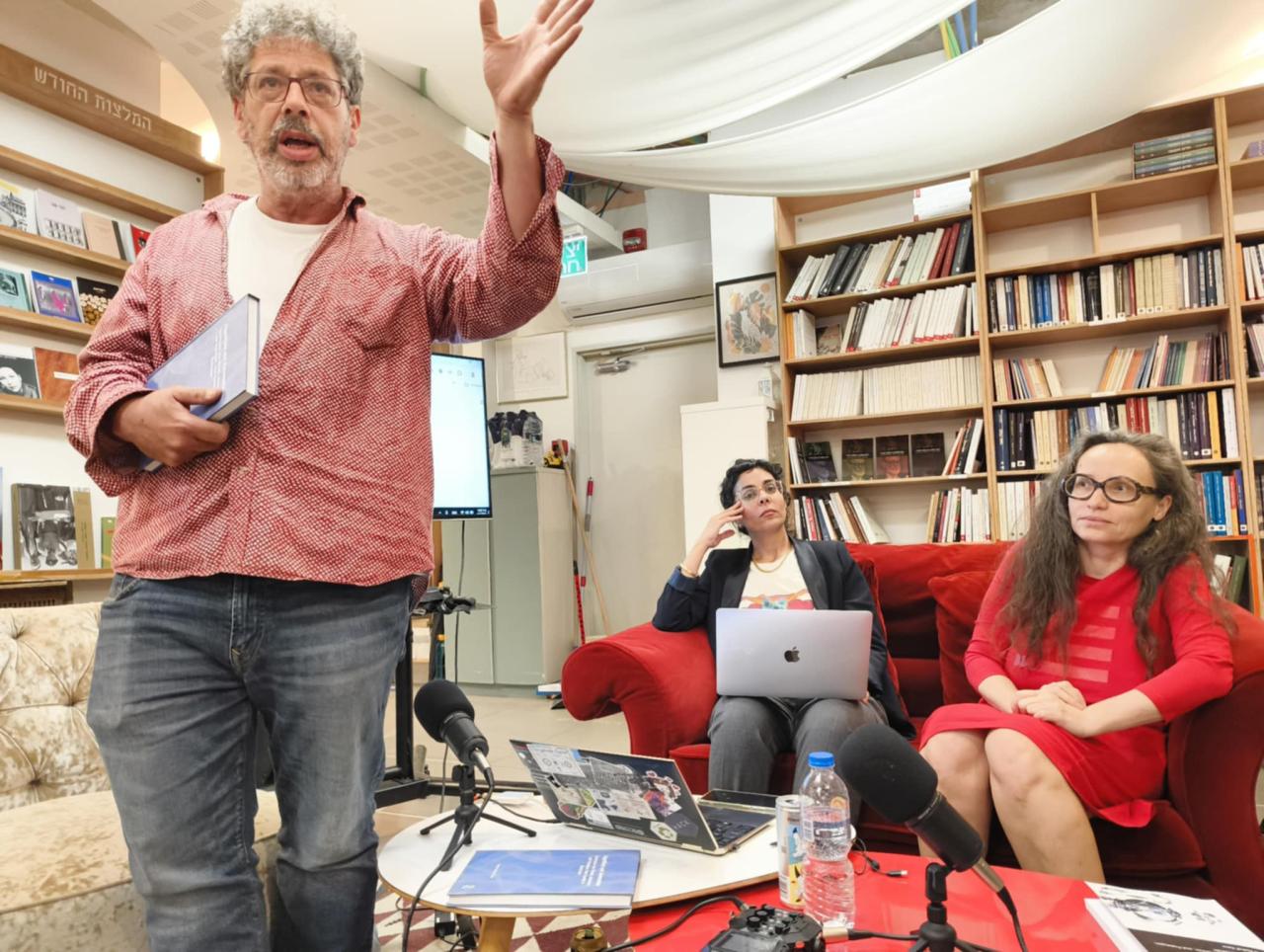
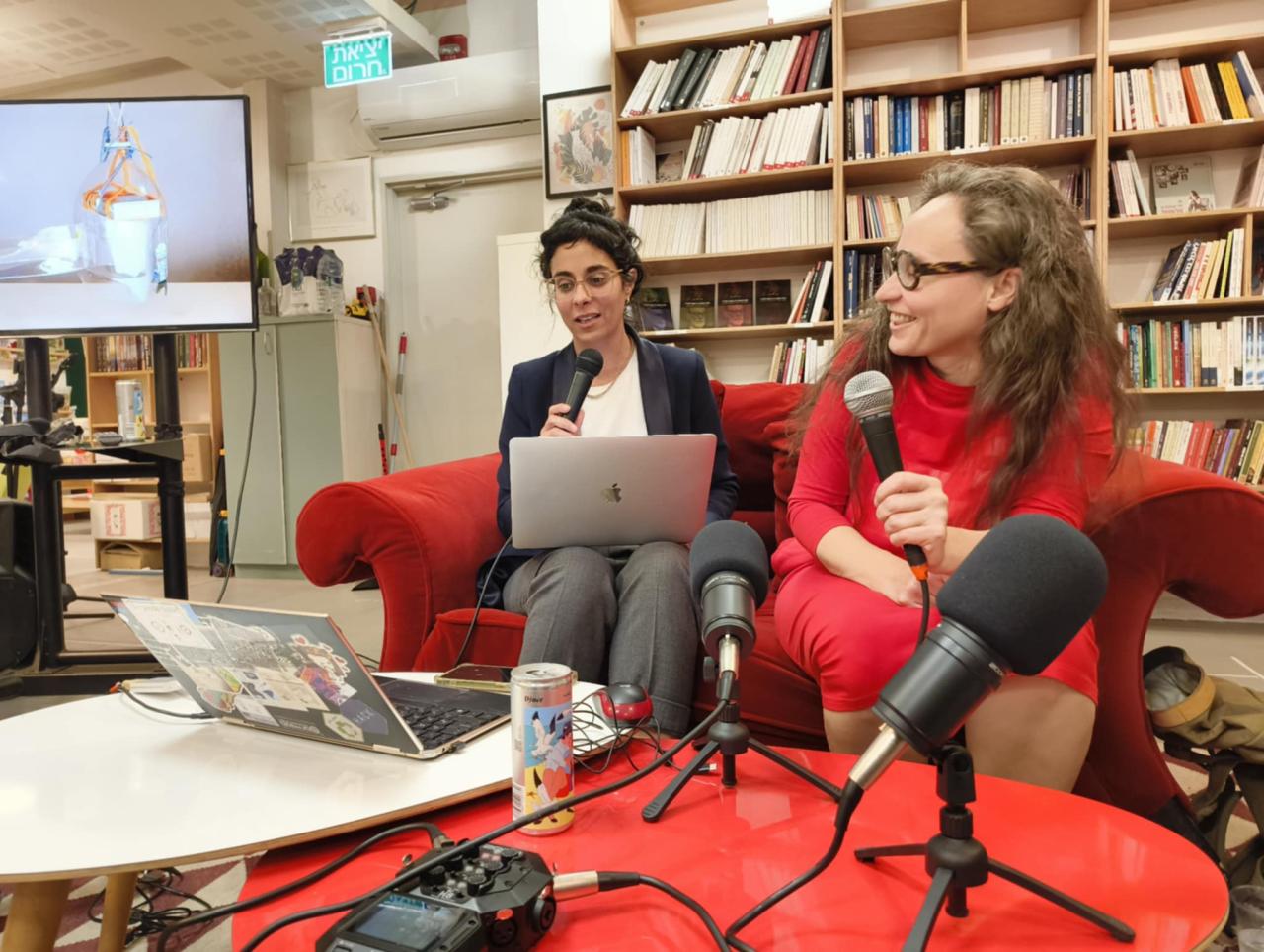
The discussion brought together Hagit Kesar, Head of the MA Program in Visual Communication at Bezalel Academy of Arts and Design, and Denisa Kera-Reshef, faculty member in the STS Program and Head of the Design and Policy Lab at Bar-Ilan University. Together, they explored ideas from Denisa’s latest book, Algorithms and Automation: Governance of Rituals, Machines, and Prototypes, and examined the implications of automation for governance, knowledge, and creativity.
At the heart of the conversation was the value of technological development driven by curiosity and inquiry, rather than solely by problem-solving or predefined objectives. Denisa introduced a key conceptual distinction from the book between autotelic technologies — whose purpose lies in their very existence — and teleological technologies, which function as tools for achieving external ends. This distinction opened a new conceptual space for thinking about the relationships between technology, creativity, and human progress.
The conversation did not remain confined to human participants. A digital version of Denisa, powered by artificial intelligence, also took part, responding in real time, challenging assumptions, and adding an unexpected layer of reflection.
Would the digital double deepen the discussion, or unsettle it?
Could it mirror, critique, or perhaps even surpass its human counterpart?
The evening was not only a rich intellectual exchange, but also a live experiment testing the boundaries of dialogue between humans and machines — and a renewed exploration of what critical thinking means in the age of artificial intelligence.